

When booking a cruise in 2025, take a look at market share, safety, and fleet size statistics for reliable services and amenities.
Published on October 31st, 2025 in Travel Tips
Cruise statistics may seem abstract, but they’re more than dry numbers. They reflect real trends, patterns, and insights that shape the industry and cruising experience. Equipping yourself with data makes it easier to strategize your next cruise, since you’ll be up to date on trends, seasonality, and important safety concerns before even stepping foot on board.
For example, for those planning a retirement trip, it may be helpful to know that the average age of a cruiser is 46, according to the 2024 State of the Cruise Industry Report. This type of information gives you a better understanding of the demographics you’ll encounter and what to expect on board.
Emergency Assistance Plus® (EA+®) considers cruise industry statistics when curating travel protection plans, ensuring members enjoy protection that reflects the actual realities of cruising. From safety indexes to cruise fleet facts, statistical data is paired with travel support to bring you one step closer to a smooth experience onboard.
The cruising industry is one of the most data-driven tourist activities, and it’s booming with growth as more people flock to ports for an escape at sea. Statistics let potential cruisers peer into what to expect, and many rely on these factors to plan their trip:
Considering these cruise market trends and statistics clarifies the onboard experience, making it easier to choose the most relevant option.
Cruise lines with the highest market share have substantial revenue, which allows them to expand their fleets, services, and add new amenities. Cruisers can follow the performance of revenue trends to determine which cruise lines reinvest in and improve their guest experience.
Cruising is a generally safe form of travel, with extensive safety protocols in place. So it’s rare to have incidents, but not unheard of. Cruise ship safety statistics provide insight into potential risks that may necessitate medical evacuation or logistical support from a trusted travel membership program, such as Emergency Assistance Plus.
The CDC closely monitors cruise ship outbreaks through the Vessel Sanitation Program (VSP) to ensure that fleets meet rigorous public health standards. If more than 3% of passengers on a ship exhibit symptoms of acute gastroenteritis, such as diarrhea or vomiting, the program publishes data to provide travelers with a clear view of the risk.
A travel membership program like EA+ can assist ill cruisers once a ship docks at a port by providing a transfer to the nearest medical facility for immediate treatment. Their professional team can also arrange any logistics to minimize the stress of an interrupted cruise itinerary, from providing translation services to arranging emergency travel.
Despite the cruising industry’s overall safe reputation, accidents and crimes on board do occasionally occur. The U.S. Department of Transportation maintains diligent records of cruise line incidents, which are made publicly available. This aligns with the Cruise Vessel Security and Safety Act (CVSSA), designed to provide more transparency for travelers.
In the first quarter of 2025, Carnival reported 12 crimes to the FBI under mandatory reporting rules, marking the highest number of incidents reported by a specific cruise line this year. Royal Caribbean reported nine incidents in the same period. Carnival also reported 13 sexual assault cases in 2024, the highest amount on any major cruise line.
A collection of ships within a specific cruising brand is known as a fleet. Fleets range from a small handful of ships to hundreds of diverse cruising vessels. Most fleets offer a variety of ships, with some catering towards adventure and family fun, while others focus on luxurious amenities.
Knowing fleet and capacity statistics, such as the average number of passengers on a cruise ship or the variety of ships a given cruise line operates, will help you understand what to expect before booking. Here are a few important metrics to consider:
Cruises offer a wide array of destinations, activities, and amenities, ensuring a line suited to every type of traveler. Different cruise lines cater to unique audiences. Some options are more affordable and family-friendly, and others boast luxurious ships geared towards high-net-worth cruisers.
| Cruise line | Primary demographics |
| Carnival Cruise Lines | First-time, value, and family cruisers who enjoy upbeat activities and casual dining options |
| Royal Caribbean International | Young adults, multigenerational, and adventure cruisers who prefer ample onboard entertainment and activities |
| Holland America | Cruisers over 55 and culture-seeking adults who prefer smaller crowds and enrichment programming |
| Celebrity Cruises | Affluent middle-aged cruisers looking for a resort-like experience on board |
| Norwegian Cruise Line | Both younger and older adults and friend groups, best for Broadway-style shows and modern nightlife options |
| Luxury expedition cruises | Luxury cruisers and retirees opting for all-inclusive premium vessels that focus on deep exploration of natural landmarks |
The cruising industry is constantly growing and embracing innovations, backed by decades of popularity and demand. Recent cruising has brought on new ships, record-breaking bookings, and ushered in new generations of onboard guests.
Modern travelers opt for unique hidden gems, environmentally sustainable cruising, and high-end onboard technology aboard ocean and river cruises. Here are statistics on emerging cruise market trends:
Cruising, once known for its popularity amongst middle-aged and retired travelers, is now a multigenerational affair. Gen Zers and millennials enjoy the convenience of cruising and make up 36% of the overall market. Influencer marketing plays a heavy role in exposing younger travelers to the cruising world, bringing onboard experiences to social media platforms.
Liquefied natural gas (LNG) is a modern alternative that allows vessels to operate while docked without emitting pollutants, and it is becoming increasingly popular. Cruise ships are also implementing new wastewater technology and electric power sources to minimize their footprint.
Travelers embrace sustainability onboard by investing in eco-friendly fleets, with 55% of cruisers rating environmental and sustainability practices as a top factor when choosing a line. There’s also a trend in guests’ interests in cultural and ecological enrichment programming, a nod towards the importance of green cruising.
Expedition cruising is gaining popularity with luxury and heritage-based travelers seeking a closer look at the world’s natural wonders. These intimate cruises are the fastest-growing segment of the cruising world, with a passenger increase of 22% in 2024.

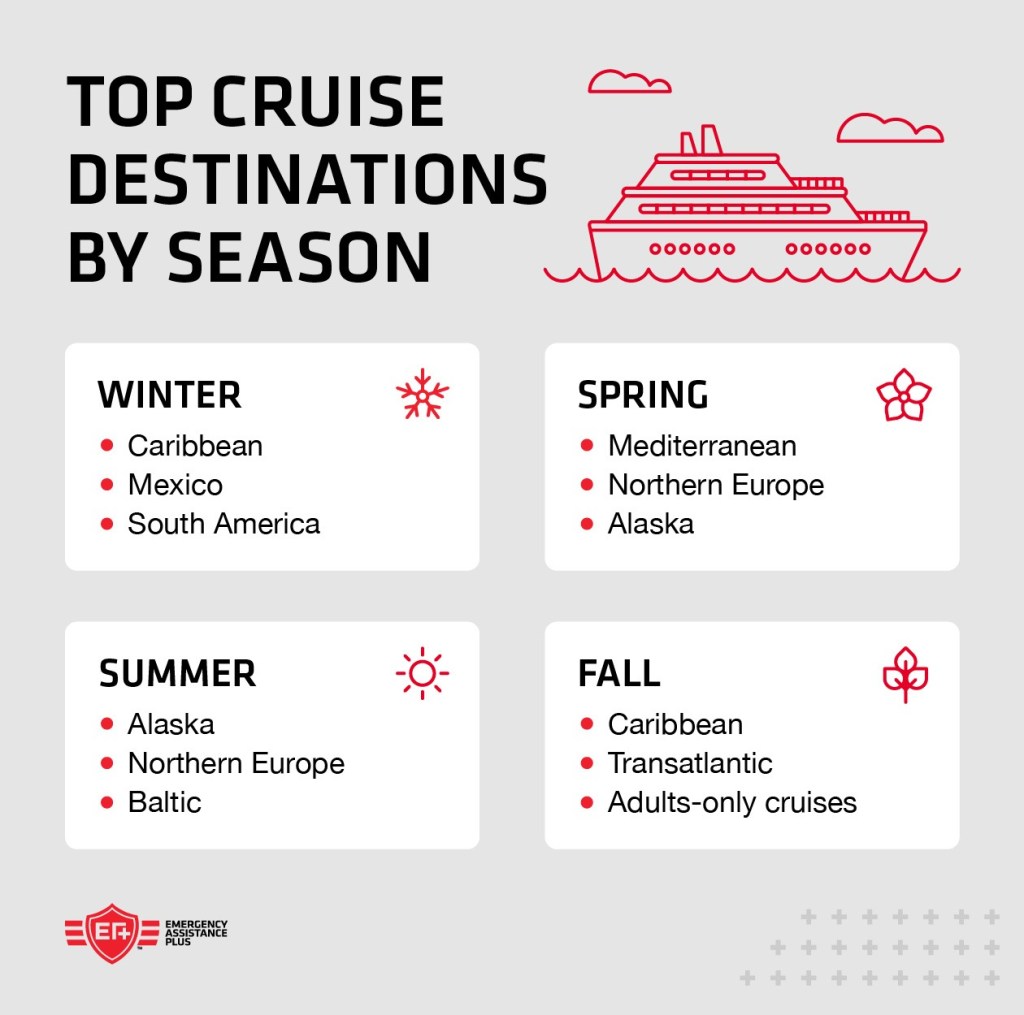
The top cruise destinations offer a blend of natural beauty, geographical convenience, and authentic culture. Here are three unbeatable vacation destinations for cruising:
The Caribbean is the leading cruising destination worldwide, with 72% of American cruisers planning on sailing to the region in 2025. With easy-to-access departure ports in Texas, Florida, and Puerto Rico and an abundance of shorter itineraries, it’s a convenient and often affordable destination.
The shores of the Mediterranean are a close second in popularity, and make up approximately 19% of worldwide itineraries. It’s one of the most convenient ways to explore Europe, allowing cruisers to visit several countries in a single trip.
Alaska is the top cruising destination in North America, and over 1.3 million passengers sailed its waters in 2024, over half of the state’s total annual tourists. Nature lovers, photographers, and animal enthusiasts book these itineraries, with most cruises traversing through the scenic fjords of Juneau.
2025’s cruise statistics show that over 33 million travelers plan to set sail this year. With breakthrough numbers, it’s the best time to plan a trip on the fleet of your choice. However, like any other form of travel, it’s essential to prepare for emergencies.
From adventure travelers to senior travelers to families, Emergency Assistance Plus provides cruisers with 24/7 support. Your membership includes assistance with medical evacuations, long-distance transport, and hospital transfers.
Enroll nowThe cruise industry consists of three segments, including the mass-market, premium market, and luxury market.
Royal Caribbean and Carnival are mass-market lines that cater to value cruisers. Holland America and Celebrity Cruises offer premium dining options and high-end accommodations. Regent Seven Seas and Seabourn lines are highly personalized, luxury cruise experiences.
The cruise industry mainly targets and serves older adults, as this demographic has more availability and financial resources for cruising. Families and couples also make up a large portion of seabound vacationers.
There are approximately 51 ocean-based cruise lines in operation worldwide. When including smaller fleets, such as river and expedition vessels, the total number of cruising brands increases to approximately 85 lines.
The best time to book a cruise is during “wave season”, a time when cruise lines offer their best deals of the year. Wave season is during January, February, and March. During this time, you’ll find reduced fares, complimentary cabin upgrades, and bonus onboard credits.
It’s rare for a passenger to fall off a cruise ship, and an average of 19 people experience a man-overboard incident each year, according to Cruise Lines International Association (CLIA).
Each cruiser pays approximately $286 per day in revenue, according to Cruise Market Watch. This amount totals to $2,000 in revenue per passenger on a 7-day cruise, and exceeds $6 million in profits per 3,000 guests. Profit may vary depending on operational costs such as port fees and fuel.
Research and select a reputable cruise line with a proven operational history and a strong safety record. Read cruiser reviews, specifically ones that mention emergency protocols.
For total peace of mind, enrolling in a travel emergency program like Emergency Assistance Plus can provide support in the case of an unexpected injury, illness, or conflict. The EA+ team can arrange logistics and coordinate with your cruise line so you don’t have to navigate a crisis alone.

Our mission is to empower you on your adventures. Sign up today for our free monthly newsletter.
Subscribe TodayRelated resources

Travel Tips
With death-related travel incidents rising 60% from 2023 to 2024, it’s more important than ever to have a good plan in place before your next adventure abroad. Investing in a...
Continue Reading
Destinations
Mexico’s iconic capital attracts millions of visitors annually, and it’s a world-class destination for snowbirding during the colder months. But is Mexico City safe? The city has a lot to...
Continue Reading
